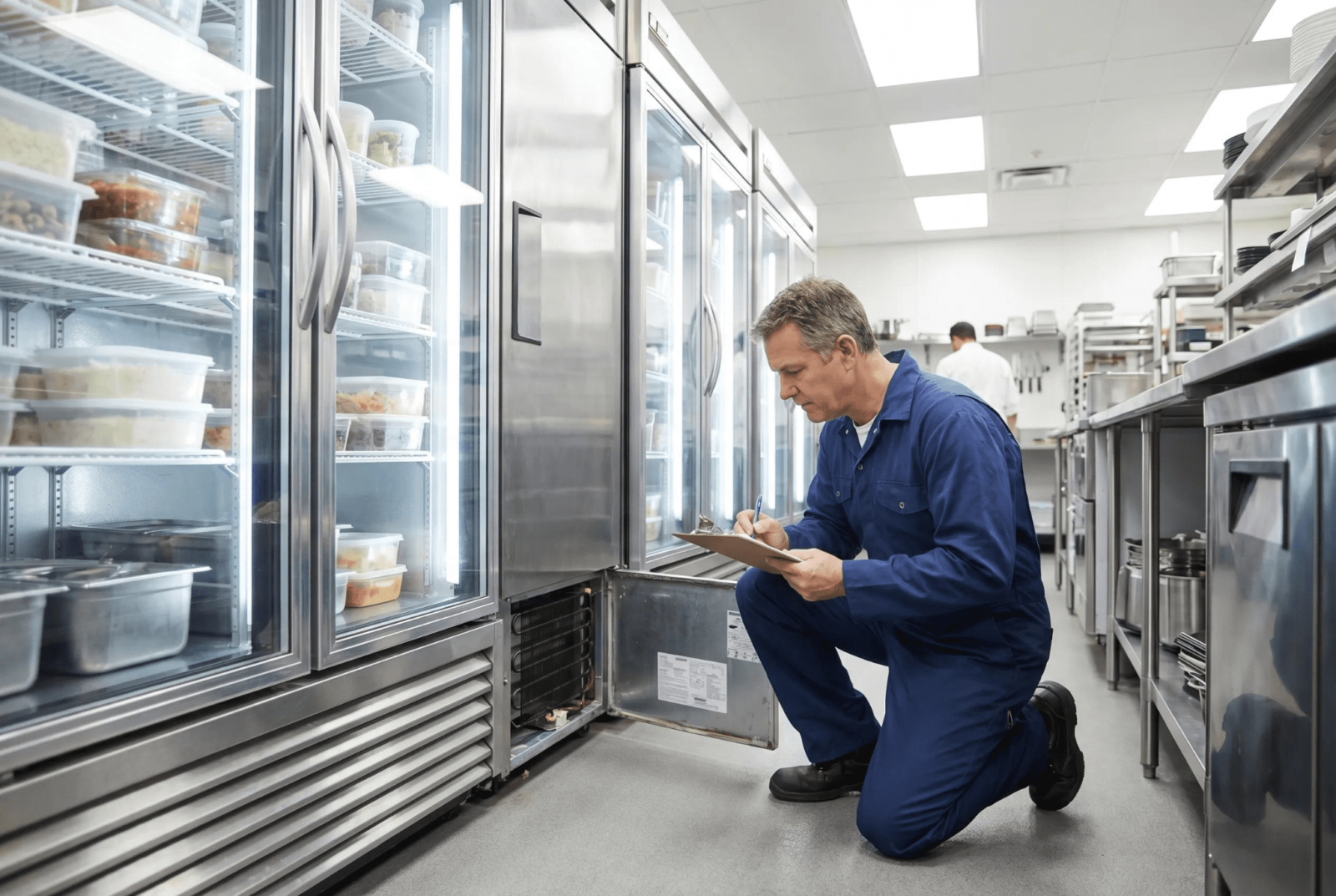
When Your Restaurant Cooler Stops Working, Every Minute Counts
July 15, 2026We get the call almost every week: a walk-in cooler that was fine an hour ago is suddenly climbing past 40°F in the middle of service. Having a restaurant cooler failure plan for before, during, and after a breakdown gives your team a clear way to respond instead of scrambling. Prepare your staff ahead of time, protect your products the moment something goes wrong, and investigate the cause once the equipment is repaired. That sequence is exactly what we walk our clients through at Refrigeration Control Co., and it helps limit the damage every time.
A commercial cooler never seems to pick a convenient time to quit. It happens in the middle of the lunch rush, at two in the morning, or on the Friday before your busiest weekend of the month. In our experience, the restaurants that come out ahead aren’t necessarily the ones with newer equipment. They’re the ones with a clear response plan, staff who know what to do when temperatures start rising, and a preventive maintenance routine that helps catch potential problems before they become emergencies.
Before a Breakdown: Build the Response Plan
Most cooler problems don’t come out of nowhere. They often start with warning signs, such as a compressor that short-cycles, condenser fans working overtime during a summer heat wave, or a unit that runs longer and longer each night just to maintain the same temperature. Our technicians see coolers fail most often in July and August, when condenser coils loaded with kitchen grease and dust can’t shed heat efficiently. These failures can often be prevented by cleaning the coils months in advance. A response plan built before anything goes wrong helps your team recognize those warning signs and act before a minor issue becomes an emergency.
Here’s what we recommend putting in place now:
- Post emergency service contact numbers where every shift lead can find them.
- Assign responsibility for checking temperatures, calling for service, and documenting the incident.
- Log cooler and freezer temperatures on a regular schedule, not just when something seems wrong.
- Identify whether another properly cooled unit is available for backup storage.
- Verify that your thermometers are reading accurately.
- Schedule routine preventive maintenance instead of waiting for a failure to arrange service.
A plan that only exists in someone’s head isn’t a plan once that person is off shift.
This is the first thing we ask about when we arrive on an emergency call, not “what broke,” but “did anyone catch this coming.” Usually, someone did.
During a Breakdown: Protect the Product First
Staying calm and moving quickly are not opposing priorities. They’re part of the same response. Every time the door opens, cold air escapes, and the internal temperature can climb faster than expected. We’ve walked into kitchens where staff kept opening the door “just to check,” and that alone reduced the time available to protect the food.
When you notice a cooler has failed:
- Keep the door closed as much as possible.
- Check and record the internal temperature immediately.
- Move high-risk items to another working refrigerated unit, if one is available.
- Avoid unnecessary handling or extra door openings.
- Call a qualified refrigeration technician without delay.
- Record the time, temperature, and anything unusual you noticed leading up to the failure.
That documentation isn’t busywork. It gives us a head start on diagnosing the cause the moment we arrive, and it gives your team a record if you need to make food-safety decisions afterward.
What Restaurant Staff Shouldn’t Try to Fix
It’s tempting to remove a panel and investigate the problem, but commercial refrigeration systems are more complex than they look. Basic checks, such as confirming that the unit is plugged in or that a breaker hasn’t tripped, may be reasonable. However, diagnosing and repairing the system should be left to a trained, qualified technician. Refrigerant, electrical, and compressor components, in particular, aren’t safe to troubleshoot without the appropriate training. We’ve seen well-meaning attempts turn a simple thermostat issue into a much more expensive compressor replacement.
While you’re waiting on service:
- Continue checking and logging temperatures periodically.
- Follow your restaurant’s food-safety procedures to determine whether affected products can be retained, must be discarded, or require further review. The temperatures and duration you document help inform that decision.
- Limit door openings to what’s necessary.
- Keep staff updated on any temporary procedures for the shift.
- Keep your notes available for the technician.
After the Repair: Find Out Why It Failed
Getting the cooler running again isn’t the end of the story. Spending a few extra minutes understanding the cause can help prevent the same problem from recurring in six months. It’s a conversation we have with every client before we pack up the truck.
Worth asking your technician:
- What actually caused the failure?
- Were there warning signs beforehand that got missed?
- Is any further maintenance or part replacement recommended?
- Does the maintenance schedule need to change going forward?
Every breakdown teaches you something about your equipment, whether you go looking for the lesson or not.
Turn a Breakdown Into a Better Emergency Plan
After every failure, add it to your incident record:
- Date and time.
- Equipment affected.
- Temperature and duration of the excursion.
- Symptoms noticed beforehand.
- Repair performed and parts replaced.
- Recommended follow-up.
- Next scheduled maintenance date.
That record does double duty, it protects you if food-safety questions come up later, and it gives you a real maintenance history to work from instead of guessing.
Preparation Is One of the Best Investments You Can Make
No restaurant owner wants to think about refrigeration problems, but being prepared makes an actual breakdown far easier to handle. A little planning helps protect your food, reduce downtime, and keep service moving even when equipment doesn’t cooperate. A restaurant cooler failure plan for before, during, and after a breakdown isn’t just a theory for us. It’s how we help our clients keep their kitchens running.
At Refrigeration Control Co., we provide commercial refrigeration service and repair for restaurant equipment, including walk-in and reach-in coolers and freezers, along with preventive maintenance and 24/7 emergency support. If your restaurant is in Southern California and a cooler isn’t holding temperature, our team serves businesses throughout Orange, Los Angeles, Riverside, and San Bernardino Counties. You can also learn more about our commercial refrigeration services for ongoing system support.
Frequently Asked Questions
What should restaurant staff record during a cooler failure?
Temperature, time of discovery, equipment affected, visible symptoms, corrective actions taken, and service information. This record helps the technician diagnose the problem and supports any food-safety decisions that follow.
Should staff try to open up or troubleshoot a commercial cooler themselves?
Basic checks, like confirming the unit is plugged in or that a breaker hasn’t tripped, are reasonable. Diagnosing refrigerant, electrical, or compressor issues should be left to a trained refrigeration technician. We regularly see minor issues turn into major repairs when someone tries to fix them without the right training.
What should happen after a restaurant cooler is repaired?
Verify the unit is holding temperature, document what was repaired, ask the technician about the root cause, follow your restaurant’s food-safety procedures for any affected product, and schedule follow-up maintenance if recommended.
How often should a commercial cooler be professionally inspected?
The right schedule depends on the equipment, usage, operating conditions, and manufacturer recommendations. A refrigeration professional can help determine an appropriate service interval for your restaurant.