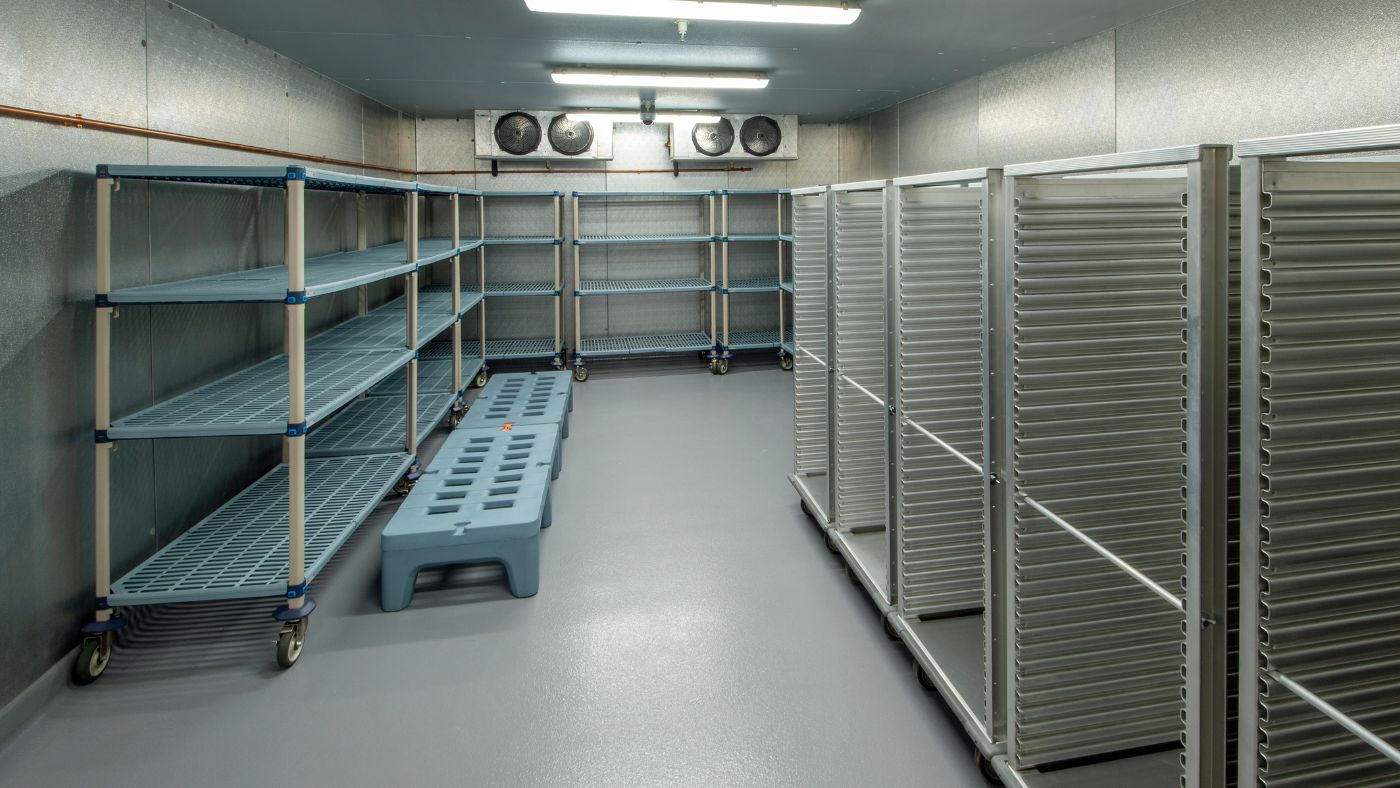
Why Thermostat Swing Matters for Orange County Commercial Refrigeration
June 9, 2026In commercial refrigeration, temperature control is not just about setting a number and hoping the system holds it. For restaurants, markets, food distributors, commercial kitchens, convenience stores, labs, and other businesses in Orange County, California, consistent refrigeration performance affects product quality, food safety, operating costs, and customer trust.
That is where thermostat swing becomes important.
Thermostat swing is the temperature range your refrigeration system allows before it turns cooling on or off. For example, if a walk-in cooler is set to 38°F and has a 4°F swing, the system may allow the temperature to rise a few degrees before the compressor cycles on again. This is normal. Most commercial air-sensing thermostats operate with a 3° to 5°F swing.
The key question is not whether your system has temperature movement. It should. The better question is whether the system is responding correctly.
Is Thermostat Swing Bad for Commercial Refrigeration?
No, not by itself. A small temperature swing is normal and necessary. If a refrigeration system tried to hold one exact temperature every second of the day, it could short-cycle, wear out components faster, and use more energy. The problem is when the swing is too wide, too frequent, or paired with slow recovery after door openings, defrost cycles, or heavy product loading. At Refrigeration Control Co., we help commercial customers understand what is happening inside their commercial refrigeration system. When a customer reports inconsistent cooling, we don’t just look at the thermostat setting. We evaluate thermostat swing, defrost cycles, air-sensing control behavior, door activity, airflow, coil condition, and how the system responds during real business conditions.
That matters in Orange County because many businesses here deal with demanding operating environments. A busy restaurant in Anaheim, a grocery store in Irvine, a commissary kitchen in Santa Ana, or a food service operation near the coast may all face different cooling challenges. Some spaces deal with frequent door openings. Others have warm kitchens, high product turnover, loading schedules, humidity, or equipment rooms that are already working hard.
A thermostat can only react to the conditions it senses. If the sensor is poorly placed, affected by door openings, exposed to unusual airflow, or not reading the box temperature accurately, the system may appear inconsistent even if the refrigeration equipment itself can perform well.
Air-Sensing Behavior in Commercial Refrigeration
That’s why air-sensing control behavior deserves attention.
Air-sensing thermostats measure air temperature, not the internal temperature of every product in the cooler or freezer. When a door opens, warm air enters quickly. The thermostat may see that change and call for cooling, even though the product temperature has not changed much. In other cases, the thermostat may not react fast enough, especially if air circulation is poor or the sensor location is not ideal.
Defrost cycles can also confuse the picture. During a defrost cycle, temperature readings may rise temporarily. Some rise is expected, but the system should recover properly afterward. If the temperature stays elevated too long, cycles too often, or never seems to stabilize, there may be a control issue, airflow restriction, icing problem, sensor concern, or equipment performance issue that needs to be checked.
Don’t Ignore Repeated Thermostat Swing
For Orange County businesses, this kind of troubleshooting is especially important because downtime can get expensive quickly. A cooler that drifts too warm can put inventory at risk. A freezer with heavy frost can struggle to maintain temperature. A system that short-cycles may drive up utility costs and put added stress on the compressor. A thermostat that’s technically working, but not well-matched to the application, can still create daily frustration.
Refrigeration Control Co. assists commercial customers by looking at the full refrigeration control picture. We evaluate whether the thermostat swing is appropriate, whether the system responds correctly during rapid temperature changes, and whether defrost cycles are timed and performing properly. We also look at how the equipment behaves during normal business use, not just during a quick snapshot reading.
This is the difference between simply adjusting a setting and actually understanding the system.
A properly controlled refrigeration system should maintain a safe, usable temperature range, recover predictably after door openings, complete defrost cycles without creating long temperature problems, and avoid unnecessary cycling. When those pieces work together, the system is easier to trust.
For business owners and facility managers, the practical takeaway is simple: Don’t panic over every small temperature change, but don’t ignore repeated inconsistency. If your cooler or freezer regularly runs too warm, takes too long to recover, shows unexpected temperature swings, or seems affected every time the door is opened, it’s worth requesting service and having us evaluate the control behavior.
Commercial refrigeration is supposed to support your operation, not create daily uncertainty. With the right testing and adjustments, many temperature complaints can be traced back to thermostat swing, sensor behavior, defrost timing, airflow, or control response.
And once those issues are understood, they can often be corrected before they become larger equipment problems.
Common Questions About Thermostat Swing
What is thermostat swing in commercial refrigeration?
Thermostat swing is the temperature range between when the system stops cooling and when it starts cooling again. A 3° to 5°F swing is common for many commercial air-sensing thermostats.
Why does my walk-in cooler temperature rise when the door opens?
Warm air enters quickly when the door opens. The thermostat may sense that air temperature change before the product temperature changes. Frequent door openings can make this more noticeable.
Is a 5-degree swing too much?
Not always. A 3° to 5°F swing is common, but whether it’s acceptable depends on the application, product type, equipment, sensor placement, and how quickly the system recovers.
Can defrost cycles cause temperature swings?
Yes. Temperature readings can rise during defrost. The important part is whether the system completes defrost properly and returns to the correct temperature range afterward.
When should I call for service?
Call when temperatures drift too far, recovery takes too long, the system cycles constantly, frost builds up, or staff keep noticing inconsistent cooling during normal use.